Off the Beaten Path: Phuket Town's Emerging Neighborhoods That Smart US Investors Are Watching in 2024

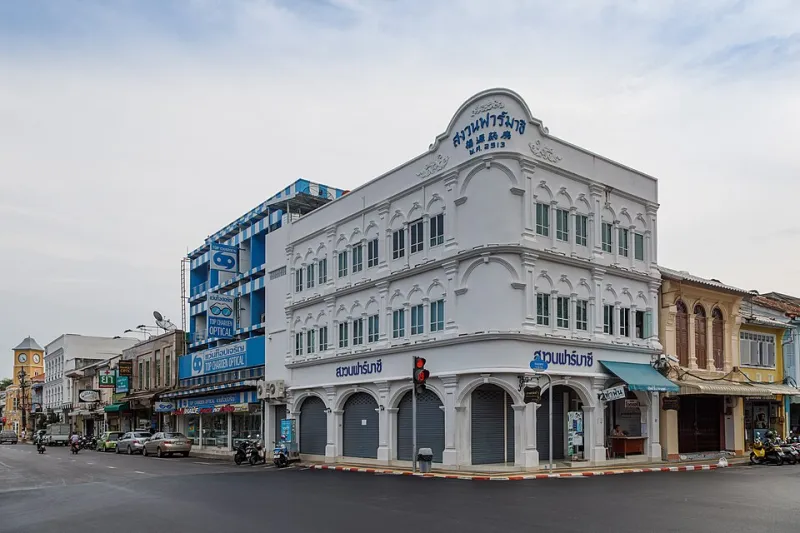
Photo by Photo by Dmitrii Sumar on Unsplash on Unsplash
Phuket Town has long occupied an unusual position in the island's property story. While the beach resort zones — Patong, Kamala, Surin — dominate international headlines, the island's historic urban core has quietly built a residential market with its own distinct character: lower entry points, genuine community infrastructure, and a tenant base that extends well beyond seasonal tourism. In 2024, that story is developing a new chapter, as a handful of neighborhoods outside the Old Town core are drawing the attention of US investors who have done their homework.
This is not a guide to the obvious addresses. It is a look at the areas where the numbers are compelling, the trajectory is upward, and the window for early positioning remains open.
Why Neighborhood Selection Matters More Than Ever
Buying a condominium in Phuket Town is not a single decision — it is a series of decisions, and neighborhood selection may be the most consequential of them. Two comparable units, priced similarly, can produce dramatically different rental yields and capital appreciation trajectories depending on their location relative to employment centers, transportation links, retail infrastructure, and the type of tenant they attract.
The Old Town itself — with its Sino-Portuguese architecture, celebrated Sunday Walking Street, and density of cafés and co-working spaces — has already been discovered. Prices there reflect that discovery. For investors seeking the combination of reasonable entry cost and meaningful upside, the more interesting conversation is happening in the neighborhoods that surround and support it.
Talad Nua and the Northern Corridor
Situated just north of the Old Town grid, the Talad Nua district has historically served as a working commercial and residential zone for Phuket Town's local population. It lacks the photogenic streetscapes that draw lifestyle bloggers, but it possesses something arguably more valuable for investors: dense, year-round residential demand.
The area's proximity to Vachira Phuket Hospital — one of the island's principal public healthcare facilities — anchors a consistent tenant base of medical professionals, hospital administrative staff, and the broader service economy that clusters around major institutions. Rental demand here does not evaporate in the low season. Condo developments in this corridor have been trading at per-square-meter prices noticeably below comparable product in the Old Town, while achieving occupancy rates that hold steady across the calendar year.
Infrastructure investment in the northern corridor has also accelerated. Road improvement projects and expanded municipal services are reducing the friction that once made this area feel peripheral. For American investors accustomed to evaluating neighborhoods based on infrastructure momentum rather than current prestige, Talad Nua merits serious consideration.
Kathu and the Inland Transition Zone
Technically straddling the boundary between Phuket Town's municipal area and the broader Kathu district, this inland zone is undergoing a transformation that long-term observers of the market have been tracking for several years. The area's appeal is partly demographic: it attracts Thai professionals, long-term expat residents, and the growing cohort of digital nomads and remote workers who prioritize reliable internet connectivity, reasonable living costs, and convenient access to both the town center and the island's western beaches — without paying beach-adjacent prices.
Condominium developments in this zone tend to offer larger unit configurations at lower per-square-meter costs than equivalent product closer to the coast. For US investors targeting the long-stay rental market — leases of three months to a year or longer — this size-to-price ratio is a meaningful advantage. Tenants seeking genuine residential space, rather than a hotel-style room, gravitate toward this type of inventory.
The presence of Central Festival Phuket, the island's largest retail and entertainment complex, within easy reach of this zone also matters. Retail infrastructure is not glamorous, but it is a reliable anchor for residential demand, and its gravitational pull on the surrounding neighborhood should not be underestimated.
Rassada: The Port District's Quiet Reinvention
Rassada, home to Phuket's main commercial port and the ferry terminal connecting the island to Phi Phi and the Andaman island chain, is perhaps the most overlooked neighborhood in the Phuket Town investment conversation. That oversight is beginning to correct itself.
The area's identity has historically been defined by logistics and transit rather than lifestyle, but recent years have seen a meaningful influx of hospitality businesses, independent restaurants, and creative enterprises drawn by lower rents and the neighborhood's authentic, non-touristy character. This pattern — creative and hospitality businesses preceding residential gentrification — will be familiar to any American investor who has watched urban neighborhoods evolve in cities like Portland, Austin, or Nashville.
Condo pricing in Rassada remains among the most accessible in the Phuket Town area, and the tenant profile is diversifying. Beyond the port workers and logistics staff who have always anchored the area's rental market, the neighborhood is attracting younger Thai professionals and the internationally mobile tenant class that gravitates toward areas with emerging food and culture scenes. Entry-level investment units here offer yields that, on a percentage basis, compare favorably with more established addresses — and the capital appreciation story is still in its early chapters.
What These Neighborhoods Have in Common
Stripped of their individual characteristics, the areas profiled here share a set of fundamentals that experienced property investors recognize as preconditions for sustainable value growth.
First, each has an employment or institutional anchor — a hospital, a major retail center, a commercial port — that generates tenant demand independent of tourism cycles. This is critically important in a market where seasonal fluctuation can significantly affect yields in purely tourist-oriented locations.
Second, all three are experiencing measurable infrastructure investment. Roads, utilities, and municipal services are improving, reducing the practical disadvantages that once justified lower pricing relative to the Old Town core.
Third, entry prices in these areas still reflect their current status rather than their trajectory. That gap between current price and future potential is precisely where investment returns are generated.
Comparing Emerging Areas to Established Expat Zones
The traditionally popular areas for international buyers in Phuket Town — the Old Town itself, and the lower slopes approaching Rang Hill — continue to perform as reliable, lower-volatility investments. They are established, liquid, and well-understood by the market. For buyers prioritizing capital preservation and ease of resale, those credentials are genuinely valuable.
The emerging neighborhoods described in this article represent a different proposition: higher potential return in exchange for a slightly longer investment horizon and a greater degree of market judgment. They are appropriate for investors who have done their due diligence, understand the local fundamentals, and are comfortable holding a position while a neighborhood's trajectory plays out.
Neither approach is universally superior. The right choice depends on your investment timeline, your tolerance for market variability, and whether you are prioritizing current yield, capital appreciation, or some combination of both.
The Investor's Takeaway
Phuket Town's property market in 2024 rewards investors who look beyond the obvious. The neighborhoods that are generating the most interesting conversations among experienced US buyers are not the ones featured most prominently in developer marketing materials. They are the areas where local fundamentals are strong, infrastructure is improving, and pricing has not yet caught up with the underlying story.
For American investors willing to conduct genuine research — visiting neighborhoods in person, analyzing rental comparables, and engaging local market professionals with direct knowledge of these areas — the opportunity is real. The window, as it always does, will eventually close.