Pool, Gym, or Co-Working Space: Which Condo Amenities Actually Move the Needle on Rental Returns in Phuket Town
When a developer markets a new condominium project in Phuket Town, the amenity list often reads like a five-star hotel prospectus: rooftop infinity pools, sky lounges, co-working suites, state-of-the-art fitness centers, smart-lock security systems, and curated lobby art installations. For American buyers evaluating properties from thousands of miles away, these features can feel equally compelling — or equally ambiguous. The real question is not which amenities sound impressive, but which ones renters are actually willing to pay more for.
Data from property managers operating across Phuket Town's mid-range and upper-mid condominium segments tells a more nuanced story than developer marketing materials typically acknowledge. Some amenities correlate strongly with occupancy rates and rental premiums. Others generate significant recurring costs while delivering marginal competitive advantage. Knowing the difference is foundational to building a productive investment strategy in this market.
The Amenity Hierarchy: What Renters Consistently Prioritize
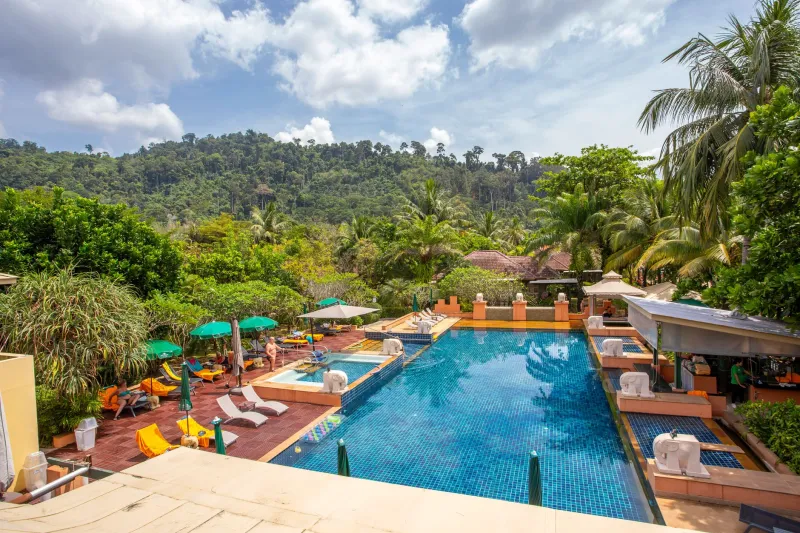
Across multiple booking platforms and direct rental channels, swimming pools remain the single most influential amenity in driving both occupancy and nightly rate premiums in Phuket Town. This finding holds across tenant segments — from short-term tourists and leisure travelers to long-stay digital nomads. A well-maintained rooftop or podium-level pool can justify a rental premium of 12 to 18 percent over comparable units in pool-free buildings, according to aggregated rate data from property management firms active in the Talad Yai and Karon adjacent neighborhoods.
The pool's performance as a premium driver is especially pronounced during Phuket's high season, which runs roughly from November through April. During these months, occupancy in pool-equipped buildings consistently outpaces non-pool properties by 8 to 14 percentage points, a gap that directly affects annual yield calculations. For American investors running return-on-investment models, this differential is material and should factor into purchase price negotiations.
Fitness centers occupy a firm second tier. A functional, reasonably equipped gym — one that includes cardio machines, free weights, and adequate square footage — has become a baseline expectation rather than a luxury differentiator in Phuket Town's competitive rental market. Properties lacking a gym are increasingly at a disadvantage, particularly when competing for the long-stay tenant segment that property managers identify as the most financially stable renter profile. However, the marginal premium commanded by an exceptionally well-equipped gym over a basic one is modest, typically in the range of 3 to 6 percent, suggesting that investors should prioritize gym presence over gym grandeur.
Co-Working Spaces: High Signal, Context-Dependent
Dedicated co-working facilities within condominium buildings have emerged as a meaningful differentiator in Phuket Town over the past three years, driven by the sustained growth of the remote-work tenant segment. Properties featuring dedicated co-working lounges — not simply a lobby corner with a few chairs, but purposefully designed spaces with reliable high-speed internet, adequate power outlets, acoustic separation, and comfortable seating — have demonstrated measurably stronger performance in the 30-to-90-day rental category.
Property managers interviewed for this analysis consistently noted that co-working amenities function as a decisive factor for digital nomads comparing two otherwise similar units. In a market where this demographic now accounts for a significant share of long-stay demand, a well-executed co-working space can reduce vacancy periods and support stable monthly rental income. For American owners who favor the long-stay model as a lower-management-burden strategy, this amenity category warrants serious consideration at the point of purchase.
The caveat is execution quality. A poorly maintained or undersized co-working space generates negative reviews that can actively suppress bookings. Investors should evaluate not just the presence of this amenity but the building management's demonstrated commitment to maintaining it.
Security Features: The Invisible Premium Driver
Among the most consistently underestimated amenity categories in investor conversations is building security infrastructure. Key-card access systems, CCTV coverage of common areas, 24-hour on-site security personnel, and secure parking facilities do not generate the visual appeal of a rooftop pool, but they function as quiet premium drivers — particularly for the international tenant segment that Phuket Town attracts.
Review analysis across major short-term rental platforms reveals that security-related mentions in guest reviews correlate positively with repeat bookings and higher star ratings. For American owners managing properties remotely, strong security infrastructure also reduces operational risk and provides a degree of liability protection that is difficult to quantify but genuinely valuable. Buildings that invest in robust security systems tend to attract a more stable tenant profile and experience fewer property-related incidents — both outcomes that protect long-term asset value.
What Doesn't Justify the Cost
Some amenities that appear prominently in developer marketing materials have demonstrated limited correlation with rental performance in Phuket Town's current market. Rooftop bars and entertainment facilities, while visually compelling in promotional photography, introduce ongoing operational complexity and cost that frequently outweigh their revenue contribution. Unless a building's management structure includes a professional hospitality operator running these facilities, they tend to fall into disuse within one to two years of project completion — a pattern that experienced local property managers describe with notable consistency.
Similarly, elaborate smart-home technology packages — automated lighting systems, app-controlled appliances, and integrated entertainment systems — generate enthusiasm at the point of sale but have not demonstrated a statistically meaningful impact on rental premiums or occupancy rates in the Phuket Town market. These features add to purchase prices and create maintenance obligations without a commensurate return in rental income.
Spa facilities and on-site restaurants present a mixed picture. In larger, professionally managed developments they can contribute to a building's overall positioning and attract a premium tenant segment. In smaller projects where they are managed by the condominium corporation itself, they frequently become financial liabilities that inflate common-area fees for individual unit owners.
Building a Smarter Amenity Checklist
For American investors approaching the Phuket Town market, the practical takeaway is to construct a tiered amenity evaluation framework rather than treating all building features as equivalent.
Tier one — non-negotiable for strong rental performance — should include a well-maintained swimming pool, a functional fitness center, and reliable high-speed internet infrastructure throughout the building. These features have the strongest and most consistent correlation with occupancy rates and rental income across tenant segments.
Tier two — valuable but context-dependent — includes dedicated co-working facilities, secure parking, and professionally managed building security systems. These amenities matter significantly for specific tenant profiles and rental strategies, and their value should be assessed in relation to the investor's intended tenant mix.
Tier three — evaluate with skepticism — encompasses rooftop entertainment venues, elaborate smart-home packages, spa facilities in smaller buildings, and any amenity that depends on ongoing operational management by the condominium corporation rather than a professional operator.
The broader principle is straightforward: amenities that serve a renter's daily functional needs consistently outperform amenities that serve a developer's marketing narrative. In a market as dynamic and competitive as Phuket Town, the investors who understand this distinction are the ones best positioned to generate durable returns.