The Dollar Dilemma: How American Condo Owners in Phuket Town Can Shield Their Returns from Baht Volatility
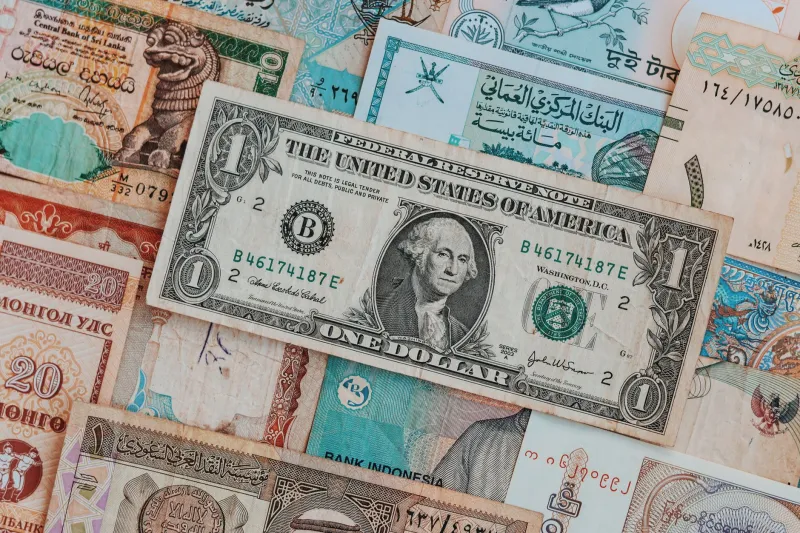
For many American investors, the appeal of owning a condominium in Phuket Town is straightforward: relatively affordable entry prices, strong rental demand, and a lifestyle asset that doubles as a vacation destination. What is less frequently discussed — at least until the first wire transfer home arrives looking smaller than expected — is foreign exchange risk.
The Thai baht and the US dollar do not move in lockstep. Over the past three years alone, the USD/THB exchange rate has swung from roughly 31 baht per dollar in early 2022 to nearly 37 baht per dollar by late 2023, before partially recovering in 2024. For a condo generating 60,000 baht per month in rent, that shift alone represents a difference of approximately $193 per month in USD terms — or more than $2,300 annually — with no change whatsoever in the property's local performance. Multiply that across a multi-unit portfolio or a five-year holding period, and the cumulative impact becomes genuinely material.
The good news is that currency risk, unlike many investment risks, is manageable. American property owners in Phuket Town have access to several practical tools for limiting their exposure — and understanding how to deploy them is increasingly part of what separates sophisticated investors from those who are simply lucky.
Understanding What You Are Actually Exposed To
Before exploring solutions, it is worth being precise about the nature of the risk. American condo owners in Thailand face two distinct layers of currency exposure.
The first is income exposure: rental revenue collected in baht must eventually be converted to dollars. The rate at which you convert determines how many dollars that income actually represents.
The second is capital exposure: the value of the underlying asset is denominated in baht. If you sell your Phuket Town condo for 5,000,000 baht and the dollar has strengthened significantly since your purchase, your USD-denominated gain may be considerably smaller — or, in extreme scenarios, negative — even if the baht price appreciated.
Most investors focus primarily on income exposure because it is more immediate and recurring. Capital exposure tends to matter most at the point of exit, which makes it easy to overlook during the holding period.
Forward Contracts: Locking In the Rate Before You Need It
A forward contract is an agreement to exchange a specified amount of one currency for another at a predetermined rate on a future date. For American investors regularly repatriating rental income, forwards offer a straightforward way to eliminate uncertainty over a defined period.
Here is how it works in practice. Suppose your Phuket Town condo generates approximately 50,000 baht per month in net rental income, and you plan to convert those earnings quarterly. Rather than waiting to see where the rate lands each quarter, you approach a foreign exchange provider — many US-based firms including Wise Business, OFX, and major banks offer this service — and lock in today's rate for conversions three, six, or even twelve months out.
The cost of a forward contract is typically embedded in the rate itself rather than charged as a separate fee, and the rate you receive will reflect the interest rate differential between the two countries. In recent years, with US interest rates elevated relative to Thai rates, forward rates have generally been slightly less favorable than spot rates — but the certainty they provide often justifies the modest premium for investors managing cash flow projections.
One practical consideration: forward contracts are binding. If your rental income falls short of the amount you have committed to convert, you may need to source the shortfall from another account. For this reason, many advisors recommend hedging only a portion — perhaps 60 to 75 percent — of anticipated income, leaving room for variability.
Multi-Currency Accounts: A Flexible Buffer Between Baht and Dollars
For investors who prefer flexibility over certainty, a multi-currency account offers a middle path. Services such as Wise, Revolut, and certain international banking platforms allow you to hold balances in both Thai baht and US dollars within a single account structure, converting between them at a time of your choosing.
The strategic value here is optionality. Rather than converting baht to dollars the moment rent is received, you can accumulate a baht balance and wait for a more favorable exchange rate environment before moving funds. This approach worked particularly well for investors who held baht balances through late 2023 and converted during the partial recovery seen in mid-2024.
Of course, this strategy also introduces timing risk — the rate could move further against you while you wait. For this reason, multi-currency accounts work best as a tactical complement to a broader approach rather than as a standalone solution.
Timing Conversions: What the Past Three Years Teach Us
The USD/THB rate between 2022 and 2024 offers instructive lessons for American condo owners.
An investor who converted baht earnings consistently each month during 2022 — when the baht was relatively strong, trading near 31–33 to the dollar — captured meaningfully better dollar returns than one who converted through most of 2023, when the baht weakened toward 36–37. A hypothetical investor receiving 600,000 baht annually would have collected approximately $18,600 at a 32.3 average rate in 2022, compared to roughly $17,100 at a 35.1 average rate in 2023. That $1,500 difference represents a return reduction of about 8 percent on income alone — before any other costs are considered.
The practical takeaway is not to attempt to time the market perfectly — few succeed at that consistently — but rather to avoid reflexive, automatic conversions that ignore the rate environment entirely. Establishing a simple rule, such as converting only when the rate is below a defined threshold, adds discipline without requiring active speculation.
Combining Strategies: A Framework for Phuket Town Investors
The most resilient approach for American condo owners typically combines elements of all three strategies above.
- Hedge a baseline portion of expected income using forward contracts, ensuring a predictable dollar floor for your core cash flow.
- Hold a baht buffer in a multi-currency account to capture opportunistic conversions when the rate favors you.
- Review your capital exposure annually, particularly if you are approaching a potential exit. Consider whether partial hedging of your expected sale proceeds makes sense given the rate environment at that time.
It is also worth consulting a US-based financial advisor with international investment experience before implementing any hedging strategy, as the tax treatment of currency gains and losses for US taxpayers can add complexity — particularly given the IRS's treatment of Section 988 transactions.
The Bottom Line
A well-located condominium in Phuket Town can deliver compelling returns by virtually any measure. But those returns are ultimately realized in US dollars, and the path between baht-denominated income and your American bank account runs directly through the foreign exchange market. Treating currency risk as an afterthought is a mistake that costs investors real money — as three years of baht volatility have demonstrated clearly.
The strategies outlined here are not exotic or inaccessible. They are the same tools used by multinational corporations and institutional investors to manage exactly this kind of exposure. For American property owners in Phuket Town, applying even a basic version of this framework can meaningfully improve the reliability and magnitude of dollar-denominated returns over a full investment cycle.