An American Buyer's Complete Roadmap to Purchasing a Condominium in Phuket Town
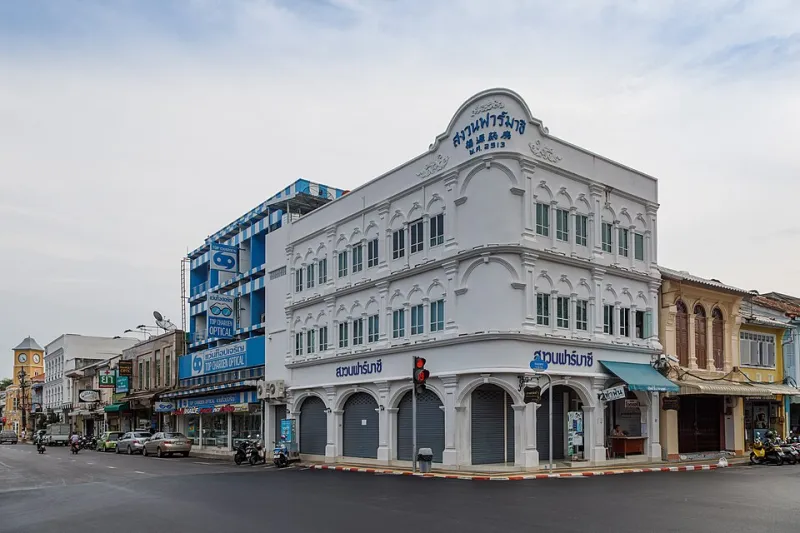
Photo: InSapphoWeTrust from Los Angeles, California, USA, CC BY-SA 2.0, via Wikimedia Commons
Deciding to purchase property abroad is one of the most consequential financial decisions a person can make, and doing so in Thailand — with its distinct legal system, language barriers, and regulatory framework — demands careful preparation. For American citizens drawn to Phuket Town's combination of cultural richness, competitive pricing, and quality of life, the path to ownership is entirely navigable. But it requires understanding a set of rules that differ meaningfully from anything encountered in a US real estate transaction.
This guide is designed to be the resource we wish every first-time buyer had before they signed anything.
Understanding Foreign Ownership Rights in Thailand
The foundational principle every foreign buyer must internalize is this: non-Thai citizens cannot own land in Thailand. This is not a loophole or an ambiguity — it is a clear statutory restriction under the Land Code Act. However, condominium units are governed by a separate piece of legislation, the Condominium Act, which creates a meaningful and legally secure pathway for foreign ownership.
Under the Condominium Act, foreign nationals may hold freehold title to condominium units, provided that foreign ownership within any single condominium building does not exceed 49 percent of the total unit area. The remaining 51 percent must be held by Thai nationals or Thai-registered entities. In practical terms, this means that when purchasing in a well-established or popular development, buyers should verify the current foreign ownership ratio before proceeding — units in desirable buildings occasionally reach the foreign quota limit, which eliminates the freehold option for subsequent buyers.
When freehold title is unavailable due to quota constraints, buyers may encounter the option of a long-term leasehold arrangement, typically structured as a 30-year lease with contractual options to renew. Leasehold ownership carries different legal protections than freehold title, and the enforceability of renewal clauses has been a subject of legal debate in Thailand. American buyers considering leasehold structures should engage qualified Thai legal counsel before proceeding — this is not a situation where general online research is sufficient.
The Foreign Exchange Transaction Certificate: A Requirement That Surprises Many Buyers
One of the most commonly overlooked requirements in a Thai condominium purchase is the Foreign Exchange Transaction Certificate, commonly referred to as a FETF or Thor Thor 3. This document, issued by a Thai commercial bank, certifies that the funds used to purchase the property were transferred from abroad in a foreign currency and converted to Thai baht within Thailand.
The FETF is not optional. It is a prerequisite for registering foreign freehold ownership at the Land Department, and without it, a buyer cannot establish legal title in their name. The practical implication is that purchase funds must be wired from an overseas account — typically a US bank — directly to a Thai bank account in the buyer's name, in a foreign currency (most commonly US dollars), and then converted to baht. Transfers made in baht, or transfers routed through intermediary accounts in ways that obscure their foreign origin, may not satisfy the requirement.
Buyers should open a Thai bank account early in the process. Bangkok Bank, Kasikorn Bank, and SCB are among the institutions with experience handling foreign buyer transactions and, in some cases, maintaining English-language service channels.
Visa Status and Its Relationship to Property Ownership
A common misconception among American buyers is that owning property in Thailand confers residency rights or facilitates long-term visa status. It does not. Property ownership and immigration status are entirely separate matters under Thai law.
US citizens visiting Thailand for property-viewing or closing purposes typically enter on a tourist visa or visa exemption, which permits stays of up to 30 days (extendable to 60 days in some circumstances). For buyers intending to reside in their Phuket Town property for extended periods, the relevant visa categories include the Thailand Elite Visa (a government-issued long-stay program with membership fees ranging from approximately $15,000 to $30,000 USD depending on the tier), the Non-Immigrant O-A retirement visa (available to applicants aged 50 and above who meet financial requirements), and the recently introduced Long-Term Resident Visa, which targets high-net-worth individuals and remote workers.
None of these visa categories are automatically triggered by property ownership. Each requires a separate application process with its own eligibility criteria. Buyers planning to spend significant time in Thailand should address their visa strategy before finalizing a purchase, not after.
Taxes, Fees, and the Costs That Don't Appear in the Listing Price
The purchase price of a condominium unit in Phuket Town is only the beginning of the financial picture. American buyers accustomed to the US closing cost framework — where buyers and sellers each bear defined categories of expense — will find Thailand's system somewhat different, and in some respects more negotiable.
The primary transaction costs at the Land Department include:
Transfer Fee: Calculated at 2 percent of the appraised value (the government's assessed value, which is often lower than the actual transaction price). This fee is frequently split between buyer and seller by negotiation, though the split is not legally mandated.
Specific Business Tax: Levied at 3.3 percent of the appraised or actual sale price (whichever is higher) if the seller has owned the property for fewer than five years. If the seller has held the property for five or more years, stamp duty of 0.5 percent applies instead. The party responsible for this cost is typically the seller, but buyers should confirm this in the purchase agreement.
Withholding Tax: A seller-side obligation calculated on a sliding scale based on the seller's individual tax position. Again, buyers should be aware of this cost as it can occasionally become a point of negotiation.
Beyond transaction taxes, buyers should budget for legal fees (a reputable Thai property attorney typically charges between $1,000 and $3,000 USD for a standard condominium purchase), due diligence costs, potential translation fees for documents, and ongoing condominium management fees (common area fees, sinking fund contributions) that vary by development.
Due Diligence: What to Verify Before You Sign
Thorough due diligence is non-negotiable. At minimum, buyers should verify: that the seller holds clean title with no encumbrances or mortgages registered against the unit; that the building's foreign ownership quota has not been exceeded; that the juristic person (the condominium management body) is financially solvent and that common area fees are current; and that the unit's dimensions and features match what is registered at the Land Department.
For off-plan purchases — buying a unit before construction is complete — additional scrutiny is required. Buyers should review the developer's track record, examine the escrow or payment protection arrangements in place, and have an attorney review the sale and purchase agreement in detail before making any deposits.
Positioning Yourself for a Successful Transaction
The buyers who navigate Thai property purchases most successfully share a common approach: they assemble their professional team before they fall in love with a specific unit. That team should include a licensed Thai attorney (not merely a developer's in-house legal representative), a currency specialist familiar with international wire transfers and FETF documentation, and a property advisor with verifiable experience in the Phuket Town market.
At Condo Phuket Town, we work with buyers at every stage of this process, from initial property search through to post-purchase rental management. Our listings represent a curated selection of condominium units across Phuket Town's most sought-after neighborhoods, and our team is available to connect prospective buyers with the legal and financial professionals needed to complete a transaction with confidence.
Phuket Town is an exceptional place to own property. With the right preparation, the path to ownership is more straightforward than many first-time international buyers anticipate — and the rewards, both financial and personal, are well worth the effort.